
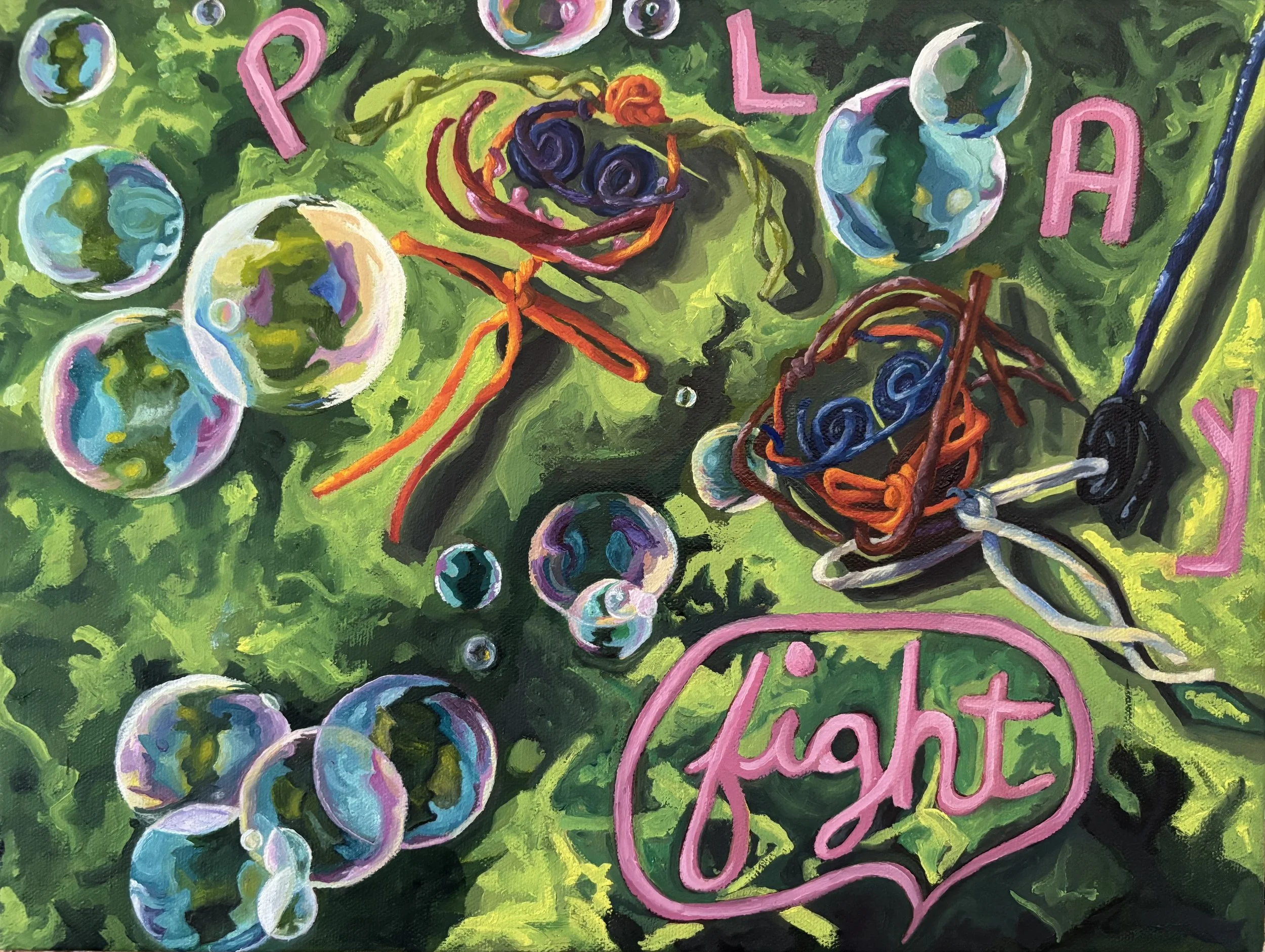
Congress
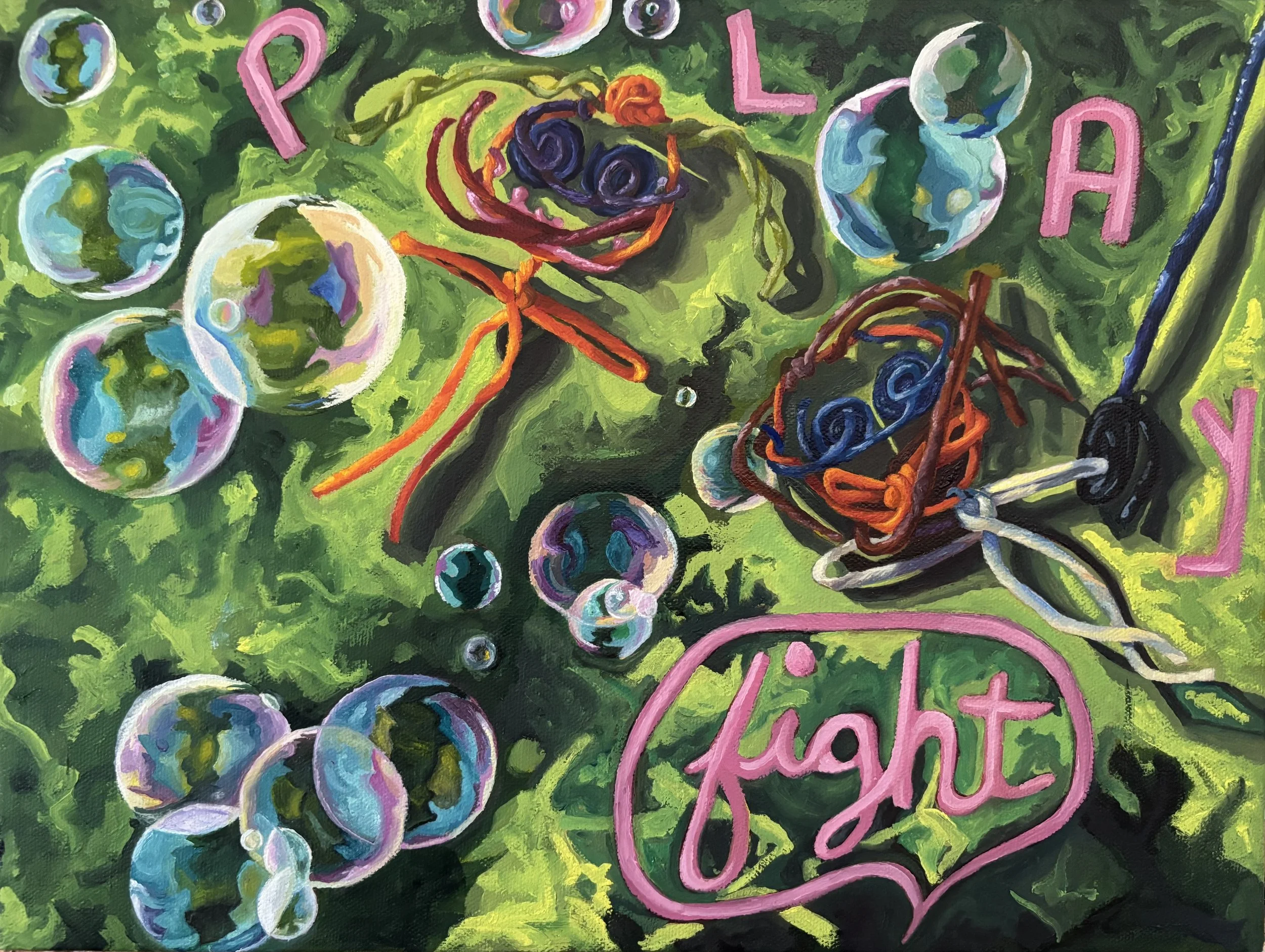
Play. Fight. Repeat.
At first glance, Congress is a playful world of wax figures, bubbles, and bright color. But the words “play” and “fight” change everything. PLAY drifts loosely through the scene, while FIGHT arrives in a large speech bubble from an unseen voice beyond the canvas. The figures aren't necessarily fighting each other. The fight has been introduced to them.
For me, the painting is an allegory for what happens when disagreement becomes spectacle, when conflict is amplified from outside, and when fighting becomes more important than listening.
The pink lettering keeps the message playful and slightly absurd. The bubbles suggest opinions, perspectives, and fragile certainties which are beautiful, fleeting, and easily popped.
The figures are small.
The fight is not.
The bubbles represent public opinion, media narratives, campaign promises, compromise, truth, civility
Congress isn't a portrait of any political party or moment in history. It's about what happens whenever conversation gives way to performance, when winning becomes more important than understanding, and when people become so entangled in defending their position that they forget why they started speaking in the first place.
Like much of my work, Congress doesn't offer solutions. It offers characters. Their expressions are playful enough to make us smile, but ambiguous enough to make us wonder whether we're looking at them or at ourselves.
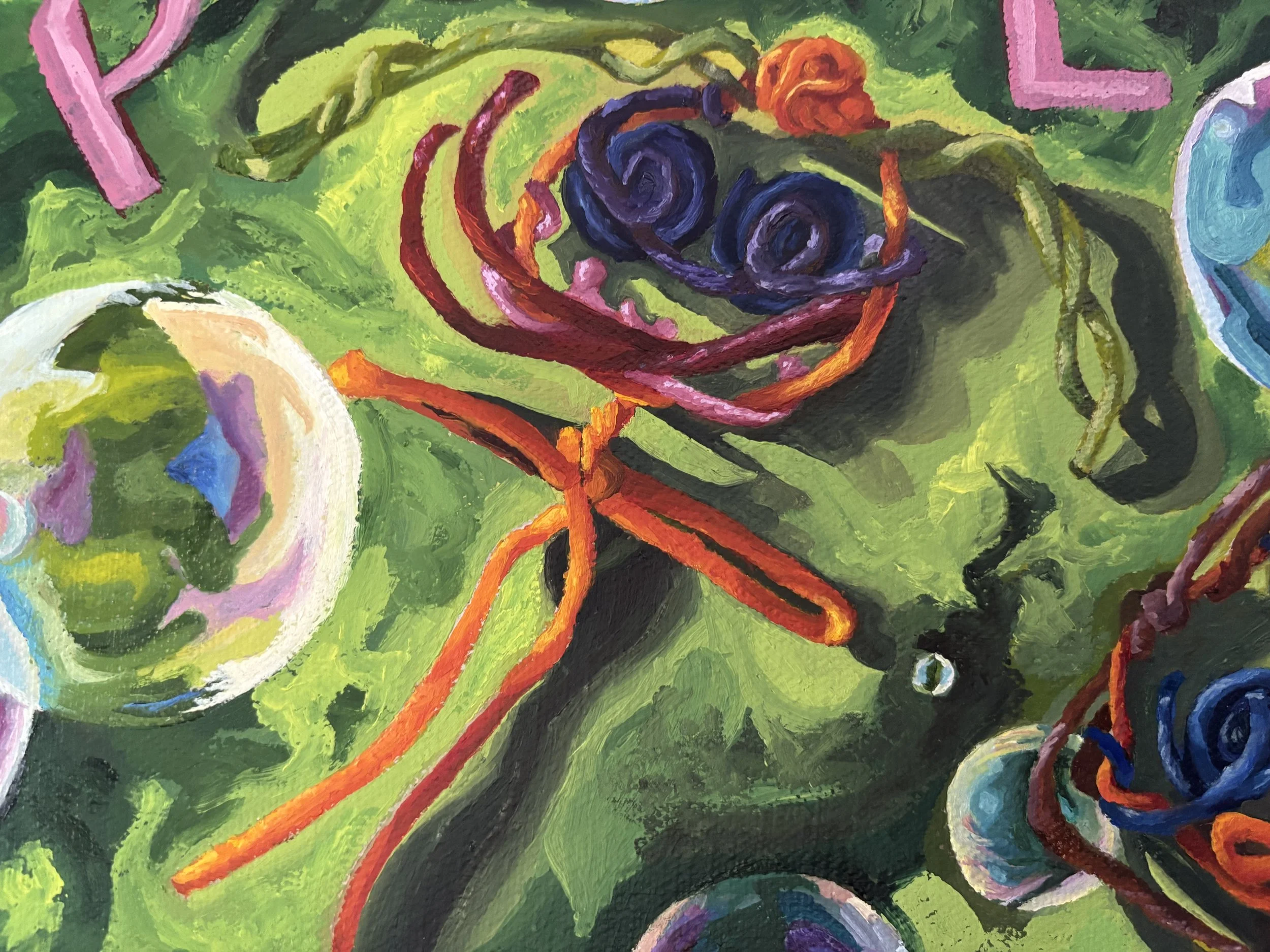
Congress Detail #1
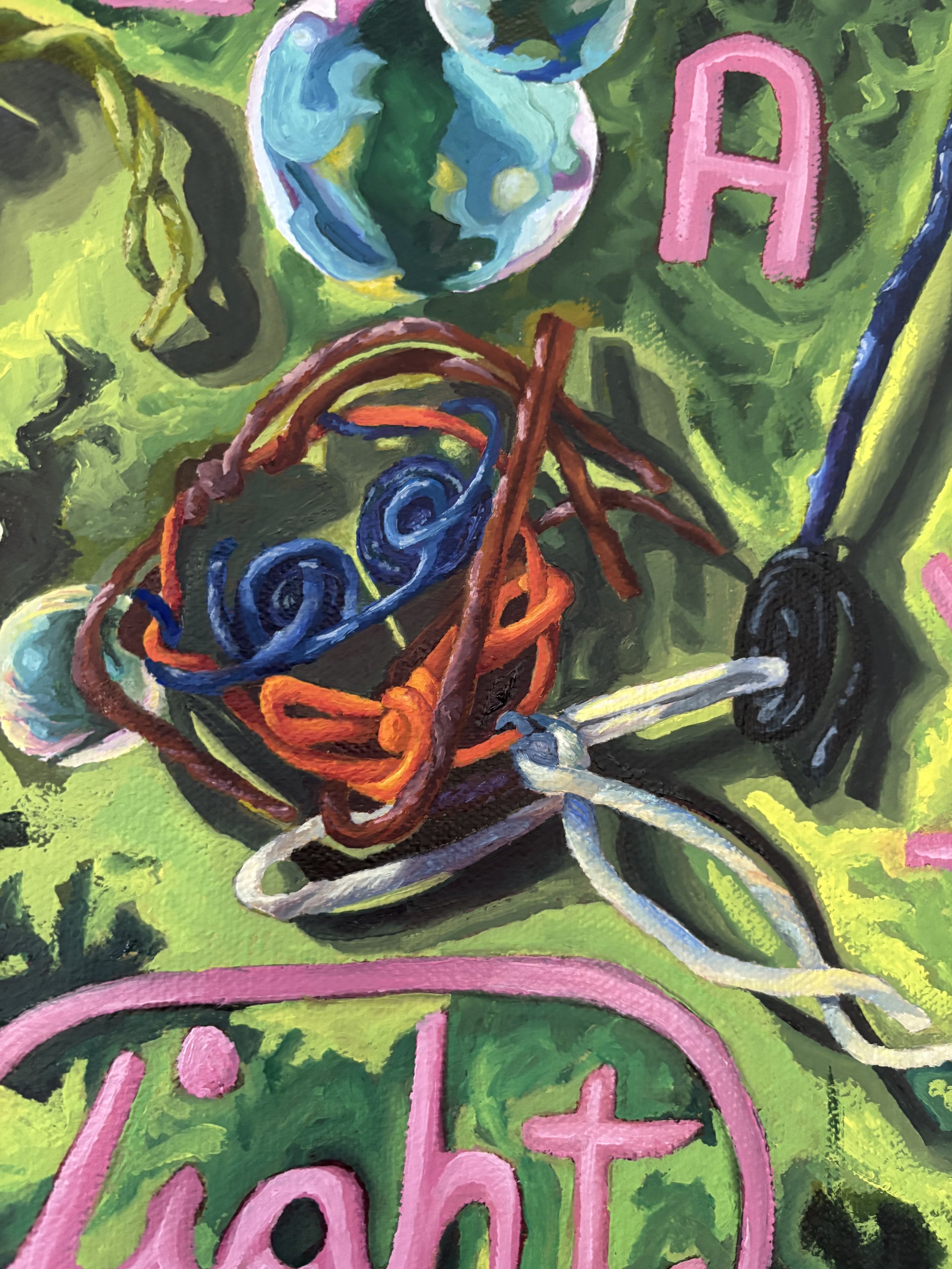
Congress Detail #2
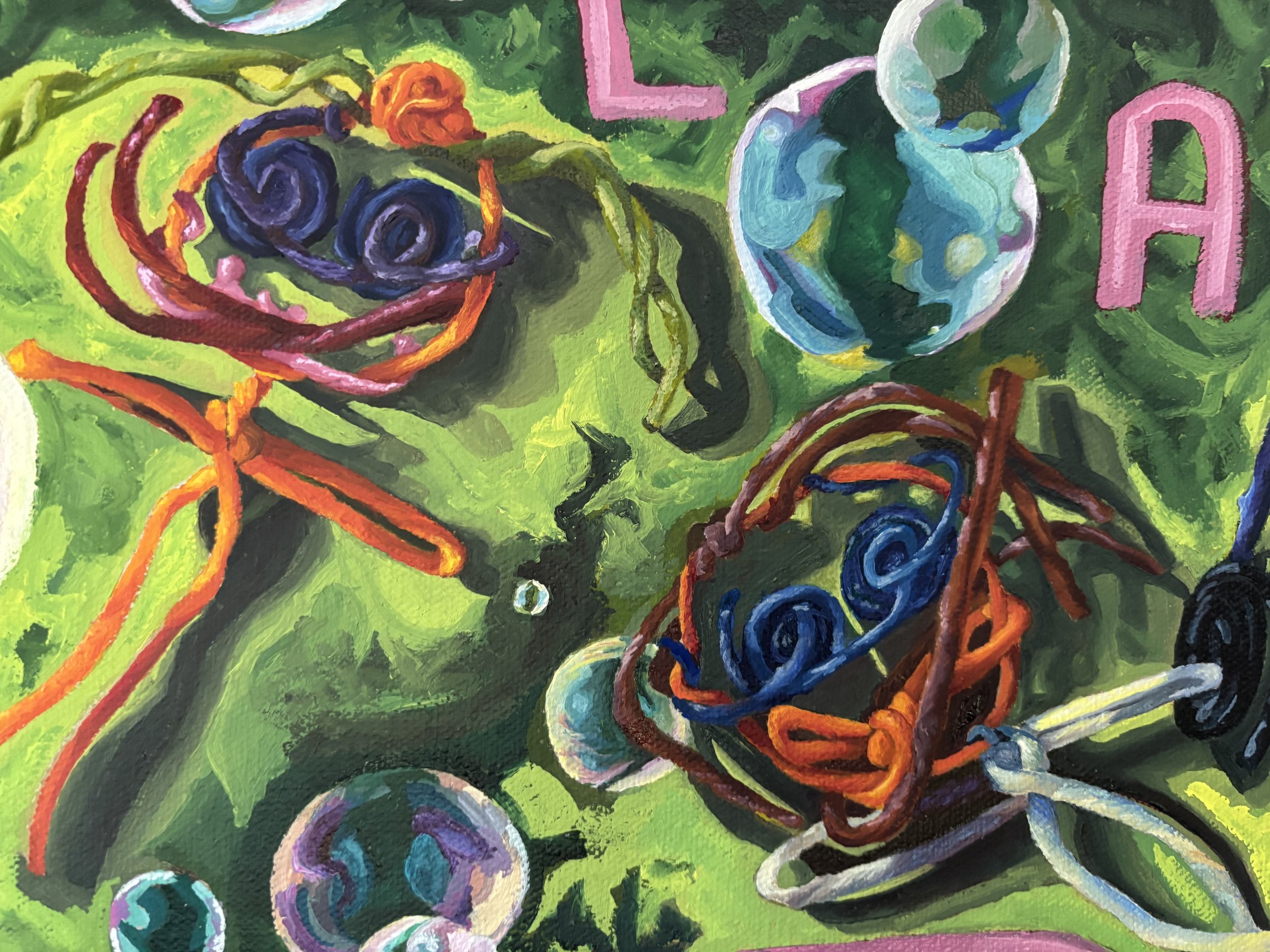
Congress Detail #3
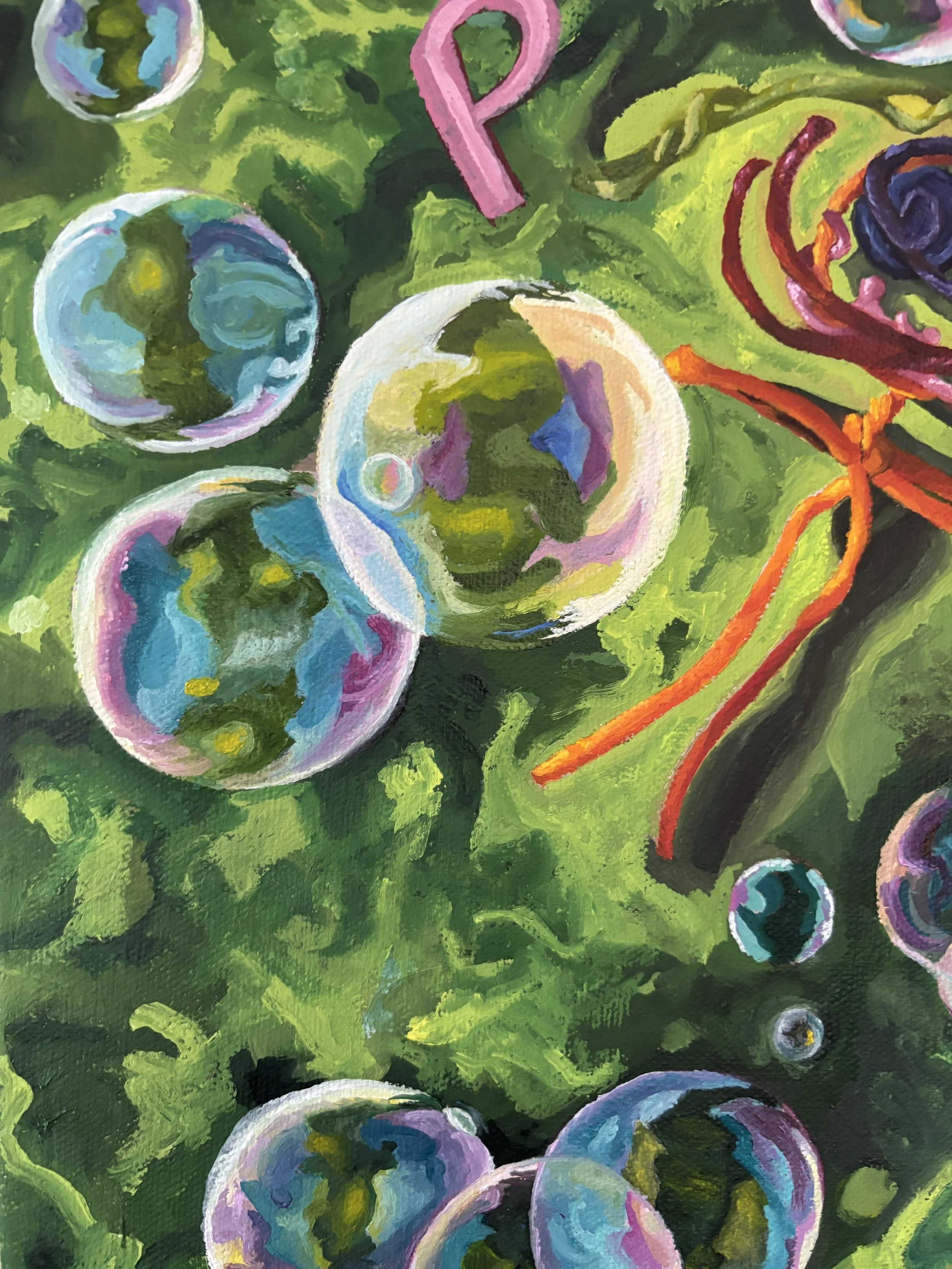
Congress Detail #4 - Bubbles!
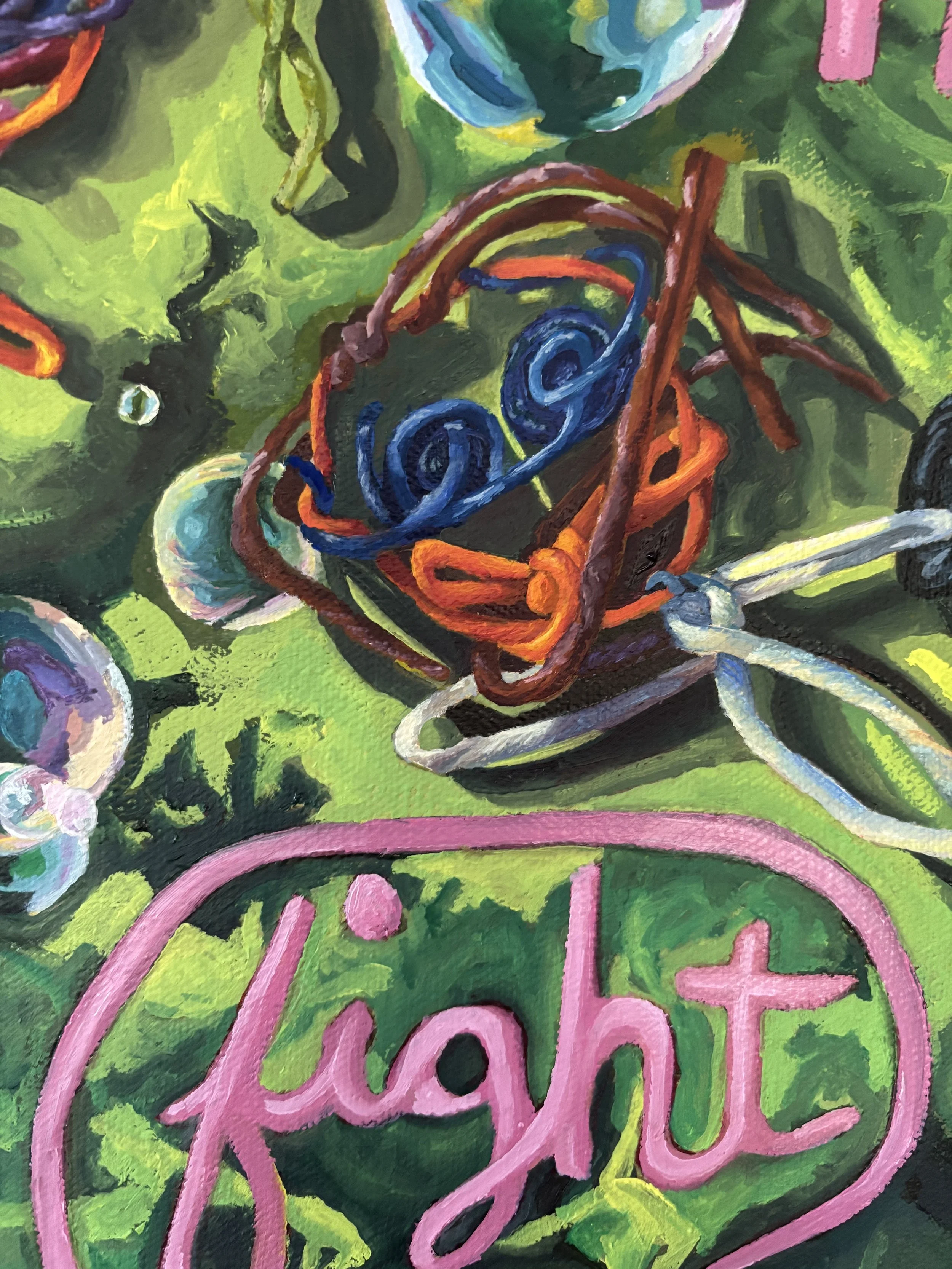
Congress Detail #5
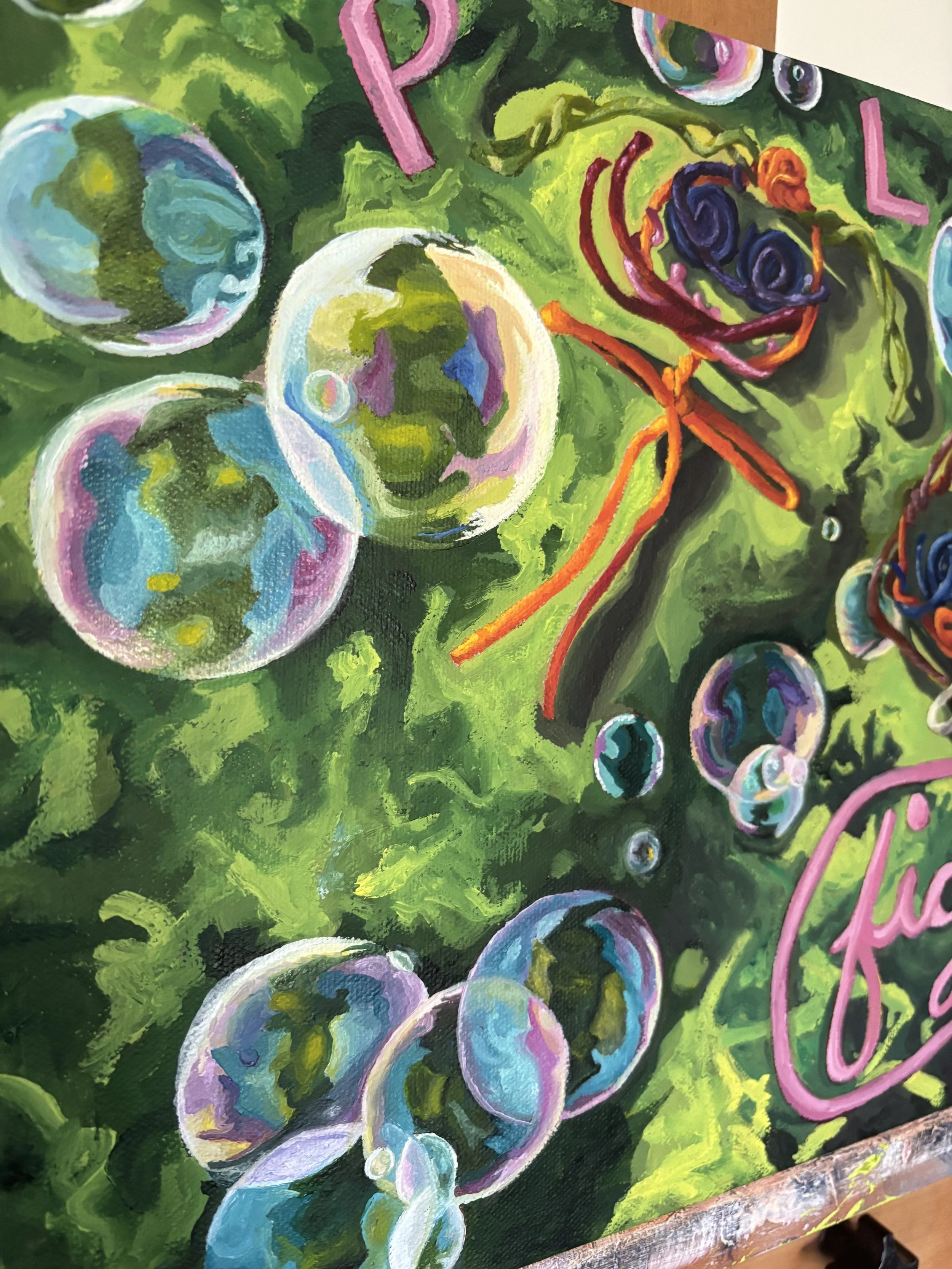
Congress Detail #6
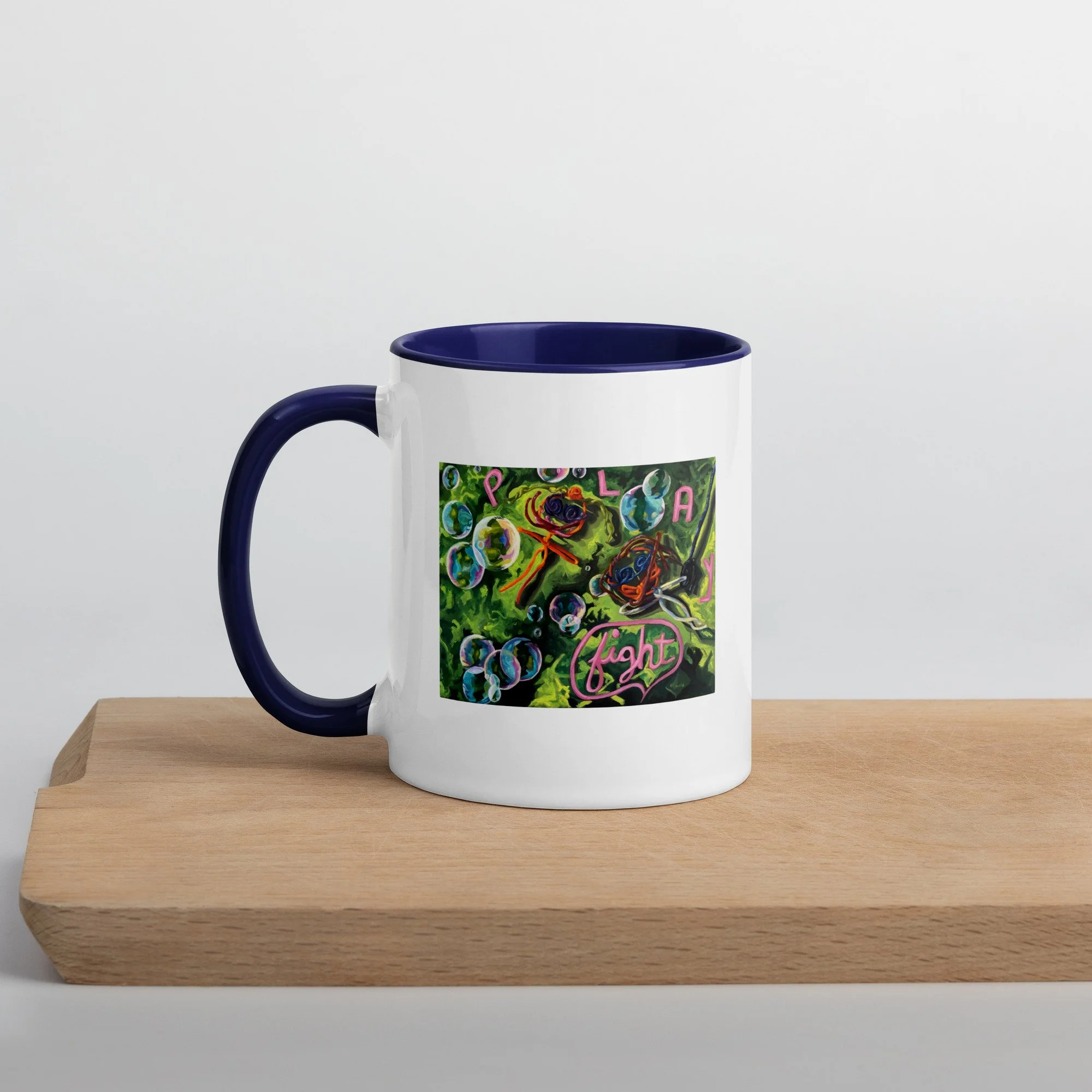
Congress Mug with Color inside
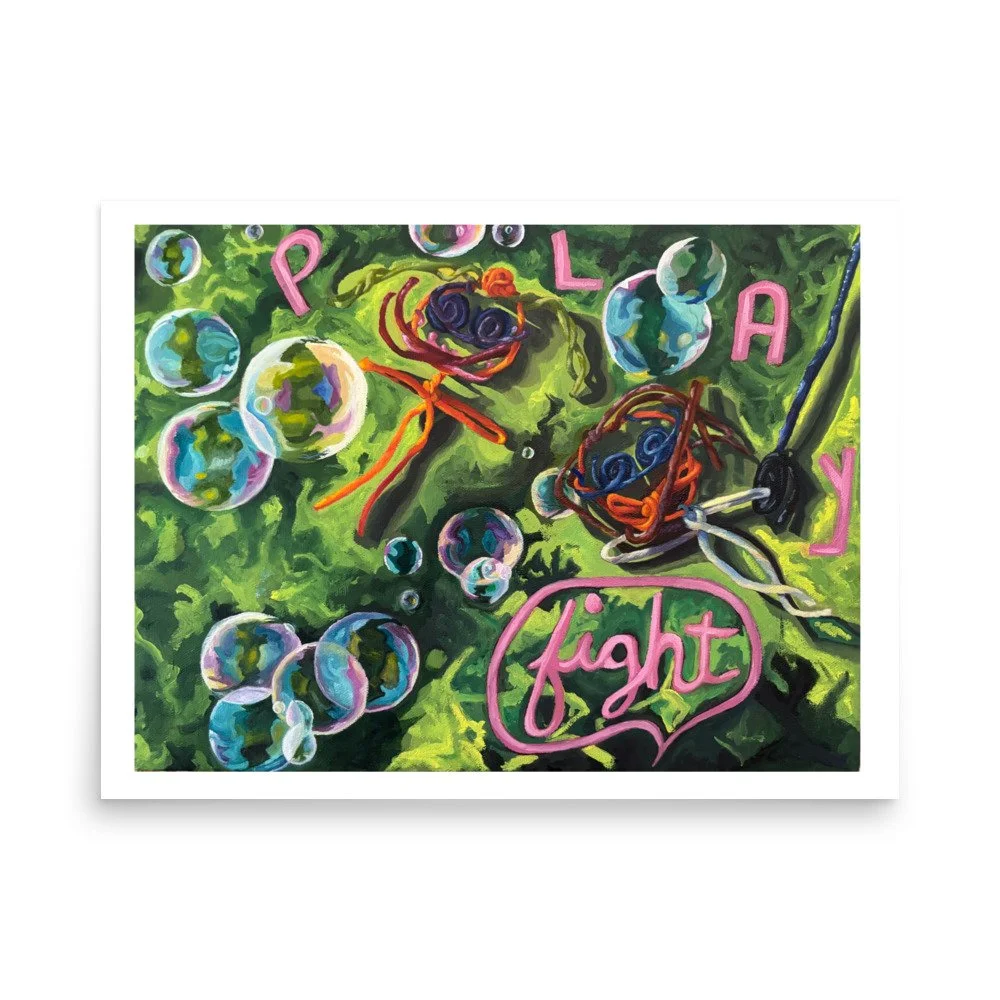
Congress Artist Prints available in multiple sizes