

Listen to Our Children
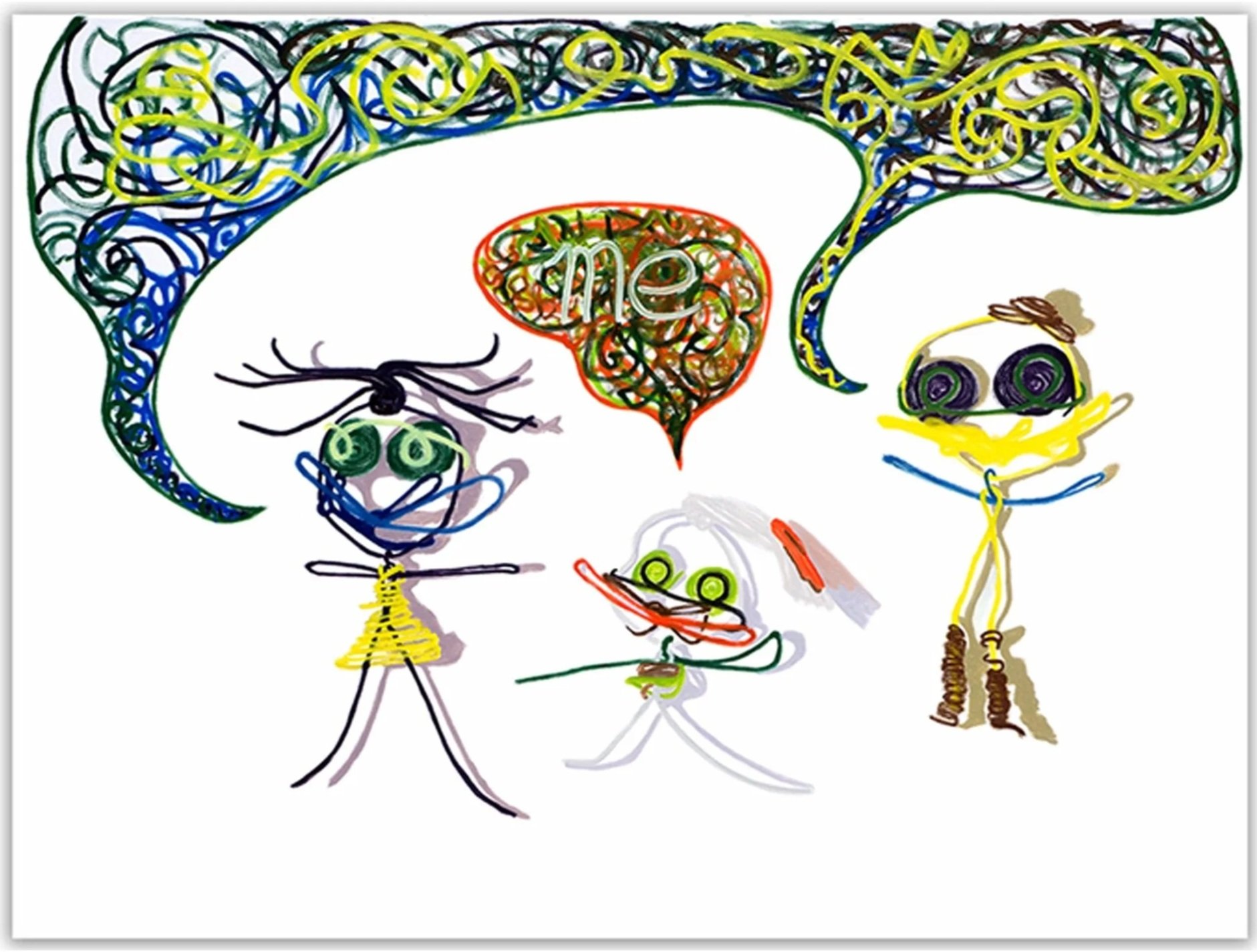
At a certain point, I decided my figures needed to start interacting with each other on the canvas. Until then, they had largely existed in their own worlds. With Listen to Our Children, I began exploring what happens when those worlds collide.
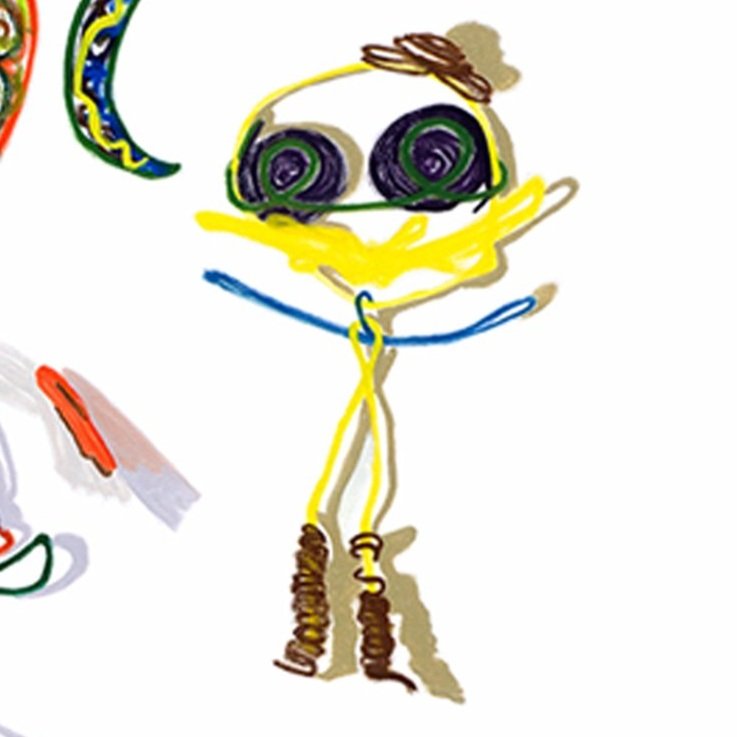
Here, a child stands in the middle, flanked by a mother and father. The parents are engaged with one another, their conversation spilling into a scribbly, indistinct word bubble. We can't quite make out what they're saying and in some ways, it doesn't matter. Their attention is directed toward each other. The child, meanwhile, has something much clearer to say:
“Me.”
It's a small word, but it carries a lot. The child is vying for attention, inserting himself into the conversation and making his presence impossible to ignore. I imagine this as the moment just before the pout. Or the tantrum. That familiar point when being overlooked begins to turn into something louder.
The painting is playful, but the situation is recognizable. Children don't always have the vocabulary, patience, or power to compete with the adult conversations happening around them. Sometimes “me” is less about wanting to be the center of attention than it is about wanting to be acknowledged at all.
The parents aren't portrayed as villains. They're simply talking. Distracted. Engaged in their own exchange. And that is part of what interests me: how easily attention can be directed elsewhere, even in ordinary moments, and how quickly a child can feel the distance.
Listen to Our Children is a reminder that listening isn't only about hearing words. It's about noticing who is trying to speak, who is waiting to be included, and what might happen when they feel unheard. Because sometimes the warning comes before the tantrum. Sometimes it's just:
“Me.”

Available as an Artist Print in multiple sizes

Head on over to my journal to read all about this image!