

Not Easy Being Green
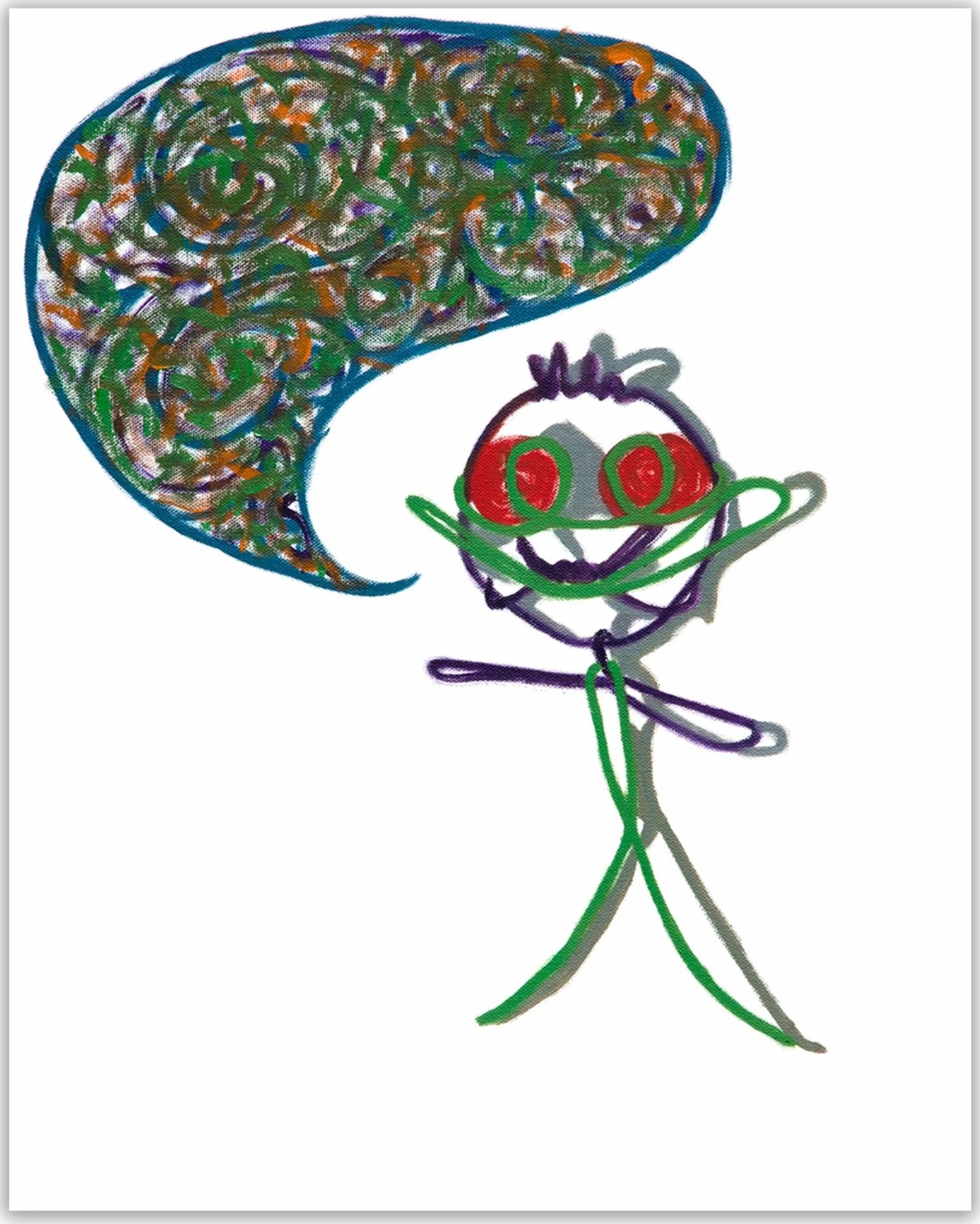
Call it a diatribe about the environment. Call it a monologue about being young and inexperienced. Call it the color of Elpheba’s skin. Anyway you cut it, it’s not easy being green. Not Easy Being Green reflects on the complexity of identity—how it feels to inhabit a self that is both visible and misunderstood. The lone figure, constructed from fluid, wax strings, stands in a state of openness, yet also tension. Its bright green form suggests vitality, growth, and difference, but the simplicity of its structure reveals a certain vulnerability, as if the figure is held together by fragile connections. The oversized, swirling thought bubble carries a dense accumulation of color and motion. It represents an internal world that is anything but simple—layered, restless, and constantly shifting. While the figure’s expression appears almost playful or approachable, the mind behind it tells a more complicated story. This contrast speaks to the disconnect between how we are perceived and what we actually experience internally.
The use of green is intentional. It evokes associations with nature, renewal, and otherness, but also with feeling “out of place.” The title nods to this tension—being “green” is not just about color, but about navigating difference, whether emotional, social, or personal. The figure does not hide this difference; instead, it stands fully within it. Ultimately, Not Easy Being Green is about embracing complexity in a world that often prefers simplicity. It invites the viewer to look beyond surface impressions and consider the rich, sometimes overwhelming inner landscapes that shape who we are.
Available as Artist Prints in multiple sizes